

Logistics 4.0 as a vision for digital transformation of logistics
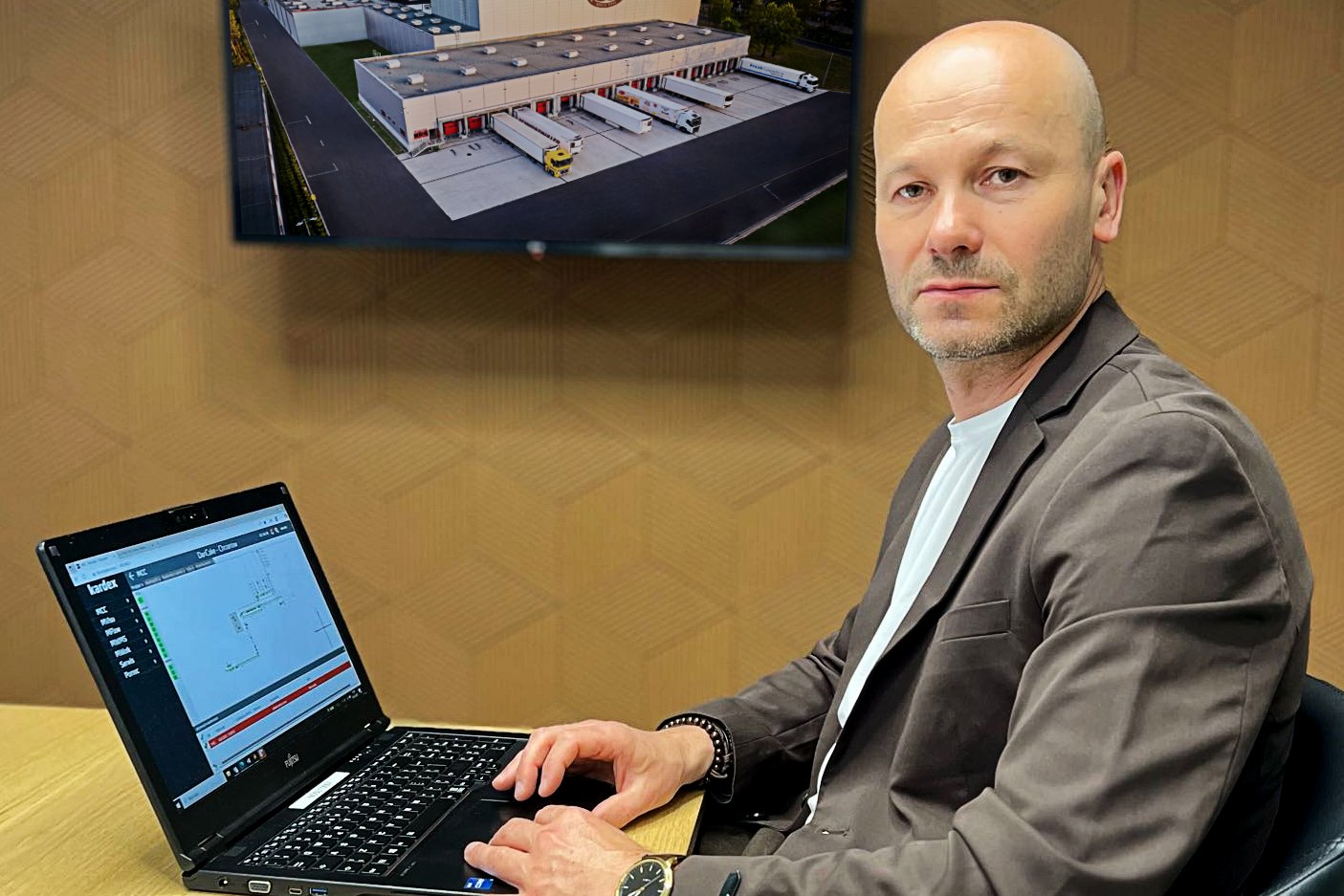
What does modern logistics look like and what challenges does it bring? Gabriel Radwan, manager of its Logistics Department, talks about this using the example of Dan Cake Polonia – a leader in the bakery and confectionery industry in Poland.
In fact, in each company this structure is slightly different - the composition of the team is always selected, both in terms of quantity and competences, to the needs. The structure in a large enterprise is certainly more complex and specialized - it takes into account both traditional areas of logistics, as well as those related to automation and the specifics of the food industry. I have been associated with Dan Cake Polonia for over four years. When I started my career, my main task was to deal with the topic of developing automation in logistics processes, which I have been successfully implementing to this day. Currently, I manage a team of over 50 people, which includes employees responsible for process management, planning and coordination of the supply chain, as well as transport and distribution, warehousing and automation. Together we create a well-coordinated mechanism that not only achieves the set operational goals, but also actively participates in the implementation of innovative technologies and continuous improvement of our processes.
Much has changed in logistics over the years, and the main goal has been to increase the efficiency of logistics processes, and consequently reduce costs. It has been a long road: from simple transport and storage systems to complex, integrated supply chains based on advanced technologies, which we call Logistics 4.0. - this is a vision of digital transformation of logistics, which combines modern technologies with traditional processes and includes automation, robotics, data exchange and now also attempts to use artificial intelligence.
At Dan Cake, we consistently strive to gain up-to-date knowledge in this area, and even, dare I say, to stay ahead of trends. We actively monitor the market, invest in training our employees, and constantly test and implement innovative solutions. Our priority is maximum automation and digitization, which in the current situation on the labor market undoubtedly translates into an increase in our competitiveness. We place equal emphasis on process optimization and cost control.
Automation processes have significantly influenced efficiency, precision, shortening order fulfillment times and reducing costs, as well as improving work safety. These include scanning, labeling, packaging, and automatic palletizing of finished products, which are performed using special machines and robots.
In addition, in 2022 we successfully launched our fully automated high-bay warehouse, which has 18 loading ramps and can hold up to 6,400 pallets. Its capacity is 2,400 pallets per day (IN-OUT), while on average between 850 and 900 pallets leave it daily, with up to 1,550 shipped during peak periods. Depending on the number of pallets waiting to be shipped, we can handle up to 50 trucks per day.
A high-bay warehouse is a modern and very economical solution, which results in more efficient use of space, greater efficiency of storage, retrieval and putting away operations, effective inventory management and optimization of warehouse processes. Warehouses of this type provide employees with a much higher level of work safety, improved customer service and, thanks to automation, reduce the number of potential errors. They are also more energy-efficient than traditional ones.
Currently, we are planning to use so-called self-propelled guided vehicles (AGV), thanks to which internal transport, i.e. delivery of pallets with raw materials directly from the automatic high-bay warehouse to the production lines, as well as transport of finished products on the sorting-warehouse line, will be carried out smoothly, safely and automatically.
Of course, to improve the company's operations, we also use modern solutions from the area of digital technologies, such as integrated IT systems (ERP), used to manage the flow of goods, information and resources. They include a wide range of applications, such as: production management (MES, SCADA), warehouse (WMS) or transport (logistic, e-CMR, EDI). Automation and digitization processes are closely related and complement each other, leading to increased efficiency, cost reduction, improved quality, increased food safety and greater competitiveness of our company on the market.
We certainly try to keep up to date with the current development of knowledge – we participate in conferences, fairs and events concerning modern solutions in this area, from where we bring a lot of inspiration. Once a year we organize a logistics congress in various branches of our companies, during which we share knowledge and new projects.
When it comes to operational issues, we are currently strongly focusing on process stabilization and their further optimization, which is to translate into savings and to even better respond to the needs of the end customer.
We never stand still and we are constantly looking for new development opportunities. We are not afraid to try and test, to strive for the ideal, because we believe that ultimately this has a strong impact on our competitiveness on the market.
News
-
General
Logistics 4.0 as a vision for digital transformation of logistics
16 June 2025 -

General
Export management is more than sales - an interview with Rina Oprzanska
March 12, 2025 -

General
Products
Dan Cake is launching a new waffle production line.
25 February 2025 -

General
Dan Cake. Eat as you please!
01 October 2024 -

General
It doesn't crumble! The Milk Rolls campaign has been launched
18 June 2024 -

General
Dan Cake serves dinner anew
14 May 2024